ServicesSolar System Add-Ons
Solar System Add-Ons in Kaysville
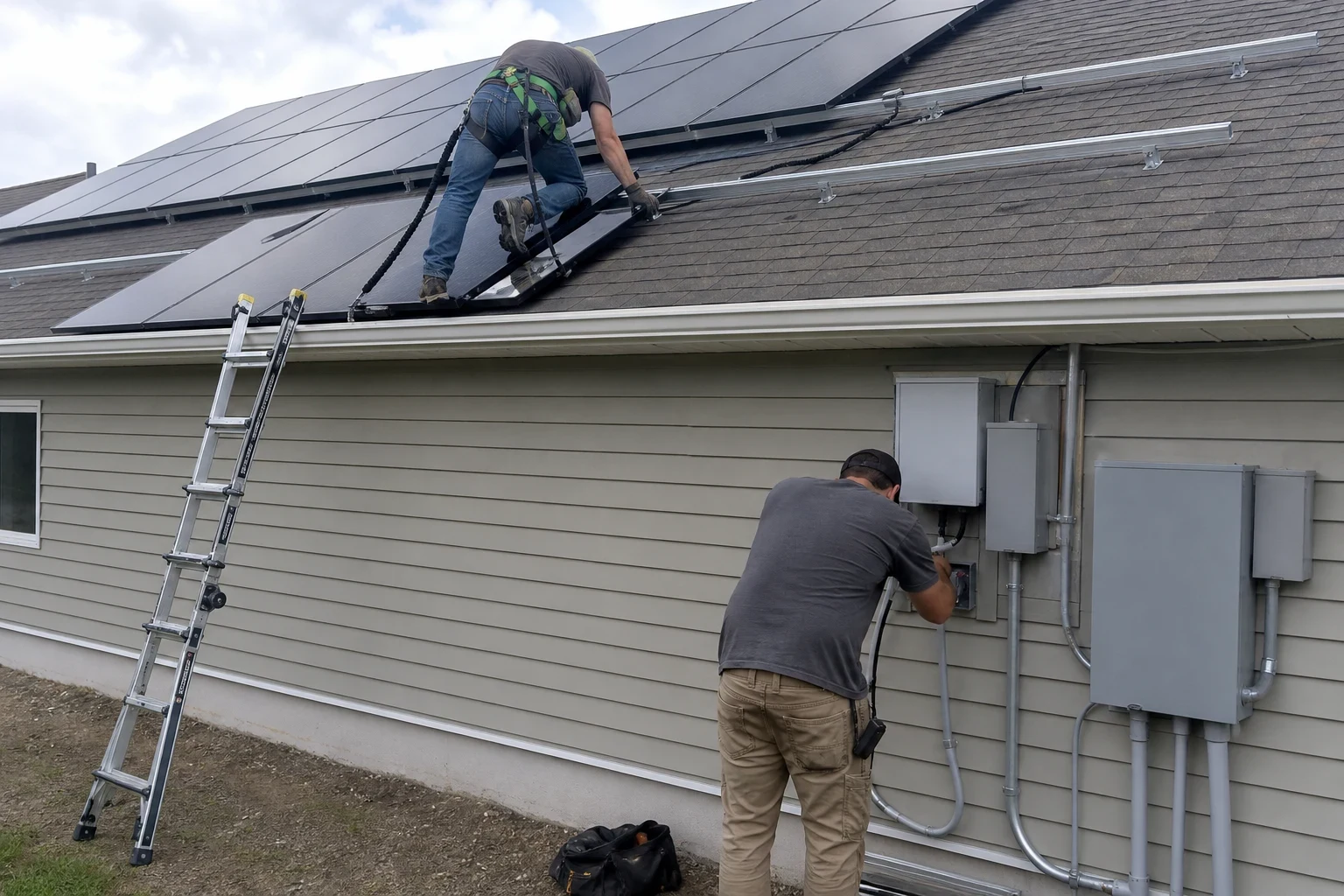
Your solar was sized for the home you had when it went in. We add panels, EV charging, monitoring and load control so the system keeps up with how you use power now, and we match each part to the inverter and wiring already on your home.
Building on the system you already own
An add-on is any piece of equipment that extends what an existing solar system can do. The most common are a few more panels, a Level 2 EV charger, consumption monitoring with current transformers on your main feeders, and a smart load controller that manages big appliances. Each one gets more use out of the inverter, conduit and interconnection you already paid for.
The catch is compatibility. A string inverter has a fixed input voltage window and a maximum DC input, so new panels have to fit its limits or get their own inverter. Microinverter systems expand more easily, but the branch circuit still has a limit on how many units it can carry. Your main panel busbar has a rating too, and the backfed solar breaker has to fit within it. We check all of that before recommending anything.
If you are starting from scratch, our Solar Panel Installation page covers new systems. If backup power is the goal, Battery Storage is its own service.
Add-ons we install
- Array expansion
- We add panels sized to your existing inverter, or add a second inverter when the first is near its limit. New modules are matched for voltage and current so they do not drag down the rest of the string.
- Level 2 EV charging
- A 240-volt charger on a dedicated circuit, placed where your car actually parks. We do a load calculation first so the charger and the solar breaker share your panel safely.
- Consumption monitoring
- Production data alone tells you half the story. Current transformers on the main feeders show what your home draws hour by hour, so you can see whether the system still covers your usage.
- Smart load control
- A load controller can pause a water heater or EV charger when demand spikes. It often lets you add equipment without upgrading the main panel.
- Monitoring gateway replacement
- Older gateways that relied on retired cellular networks or weak Wi-Fi simply go quiet. We replace the communication hardware so production reporting comes back.
Signs your system is ready for an add-on
Your bill crept back up
A new EV, heat pump or hot tub can add thousands of kilowatt-hours a year. If the system covered your usage at first and no longer does, more panels or load control usually close the gap.
The monitoring app shows nothing
A blank dashboard does not always mean the panels stopped working. Often the gateway lost its connection, and without data you cannot spot a drop in output.
You are buying an electric car
Planning the charger alongside the solar lets us size the circuit and the array together instead of guessing later.
Your panel has no open spaces
A full breaker panel limits what you can add. Load control or a properly sized upgrade solves it before a new appliance arrives.
How an add-on project runs
- 1
Virtual appointment
On a video call we review your recent utility bills, any monitoring data you have, and photos of your inverter label and main panel. In most cases that is enough to show which add-on fits your home.
- 2
Design and load calculation
We verify the inverter's input limits, the busbar rating and conductor sizes. Then you get a written scope that lists each piece of equipment on its own line.
- 3
Permits and utility paperwork
Because an expansion changes your interconnection, we file the building permit and the Rocky Mountain Power application before any work begins. You get a copy of every filing.
- 4
Install day
Most add-ons wrap up in a day or less. We follow a safe shutdown sequence, mount and wire the new equipment, and seal every conduit penetration against weather. Packaging, wire scraps and debris leave with us.
- 5
Inspection and startup
Once the city inspector signs off and the utility approves the change, we bring the system back online. We then show you the updated monitoring so you can recognize normal output.
What moves the price of an add-on
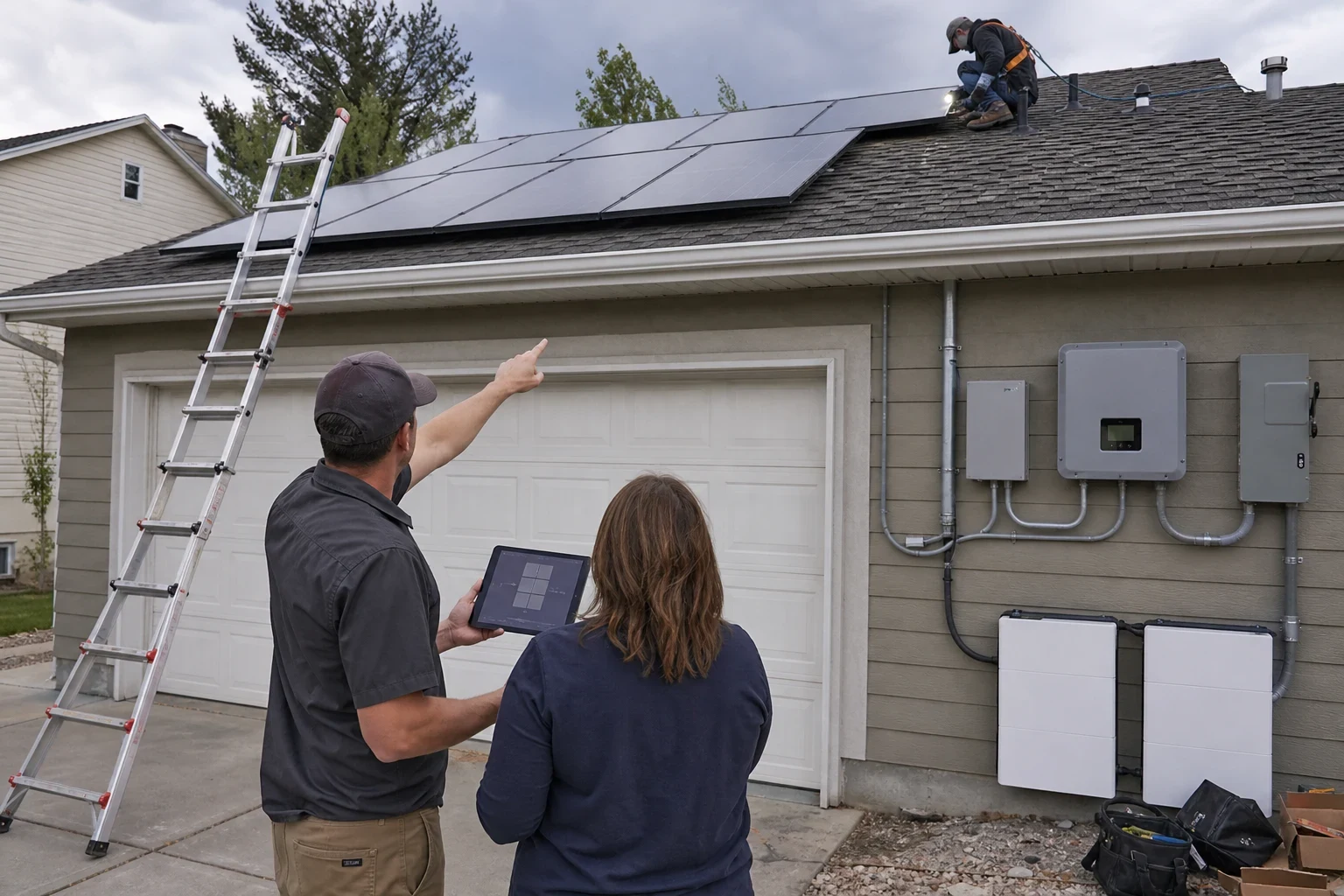
Add-on pricing depends mostly on what your existing equipment can absorb. A charger on a panel with spare capacity is a small job. The same charger on a full 100-amp panel is a different one. Many projects qualify for $0 up front.
- Inverter headroom
- If your current inverter can take more DC input, new panels connect directly. If not, a second inverter or microinverters add to the equipment cost.
- Main panel capacity
- The busbar rating limits how much solar and new load your panel can carry. Staying within it with load control usually costs less than a panel upgrade.
- Wire run and trenching
- Distance from the panel to the charger or new array sets conductor size and conduit length. Longer runs need heavier wire to keep voltage drop in check.
- Permit and interconnection review
- Any change to system size goes through the city and the utility. A larger expansion can trigger more detailed review.
Add-on questions we hear
Something not covered here? (801) 928-7645
Another company installed my panels. Is expanding them still possible?
Usually, yes. We begin with the inverter datasheet, the module model and the original permit drawings to learn what the system can accept. If a mismatch would cause trouble, we tell you during the virtual appointment, before any equipment is ordered.
Will new panels match the old ones?
The exact model may be discontinued. Electrically, voltage and current are what count, so we pick modules that fit the existing string or give them their own inverter or microinverters. That keeps the original array producing the way it did.
Do I need a new agreement with the utility?
Yes, if the system's capacity grows. We prepare the Rocky Mountain Power interconnection change and file it on your behalf. The expansion stays off until the utility approves it.
What warranty comes with add-on equipment?
The solar and battery products we install carry a 25-year warranty. Your original equipment keeps whatever terms its installer and manufacturer provided, and we go through those documents with you before anything new is connected.
Who does the electrical work?
Our own crew handles it. We are licensed in all states served, and each add-on is permitted and passes inspection before it is energized.
Find out what your system can take on
Send us a photo of your inverter label and your main panel during a short video call, and we will tell you which add-ons fit. We serve Kaysville, Layton, Farmington and nearby towns.