ServicesSolar Panel Installation
Solar Panel Installation in Kaysville
Our solar installations are planned around the next 25 years: panels and inverters sized from your actual electricity use, racking and wiring built to carry heavy snow and handle hot summers, and a layout that stays easy to inspect and maintain as the system ages.
A System Planned for Year 20, Not Just Day One
A solar array is a 25-year piece of equipment. Most of what decides how it performs in year 20 is settled at installation: how the panels are oriented, how the conductors are routed and protected, which inverter design is used, and whether the mounting hardware is matched to the load it carries. We plan those details first, then build to them.
Installation makes sense when your electric bills are steady or climbing, your site gets good sun from late morning through afternoon, and you plan to stay in your home long enough to benefit. If one of those is not true, we tell you during the first conversation.
Systems are available with $0 up front, and every panel and battery we install carries a 25-year warranty on all solar and battery products.
What the Installation Includes
- Usage-based system sizing
- We work from a full year of your utility bills rather than an estimate. Matching the array to your real kilowatt-hour use keeps you from buying panels whose extra output you never need.
- Site and shading review
- We check orientation, nearby structures and how trees will grow. A branch that shades one panel in the afternoon now may shade several within a decade, so we plan around it from the start.
- Inverter selection
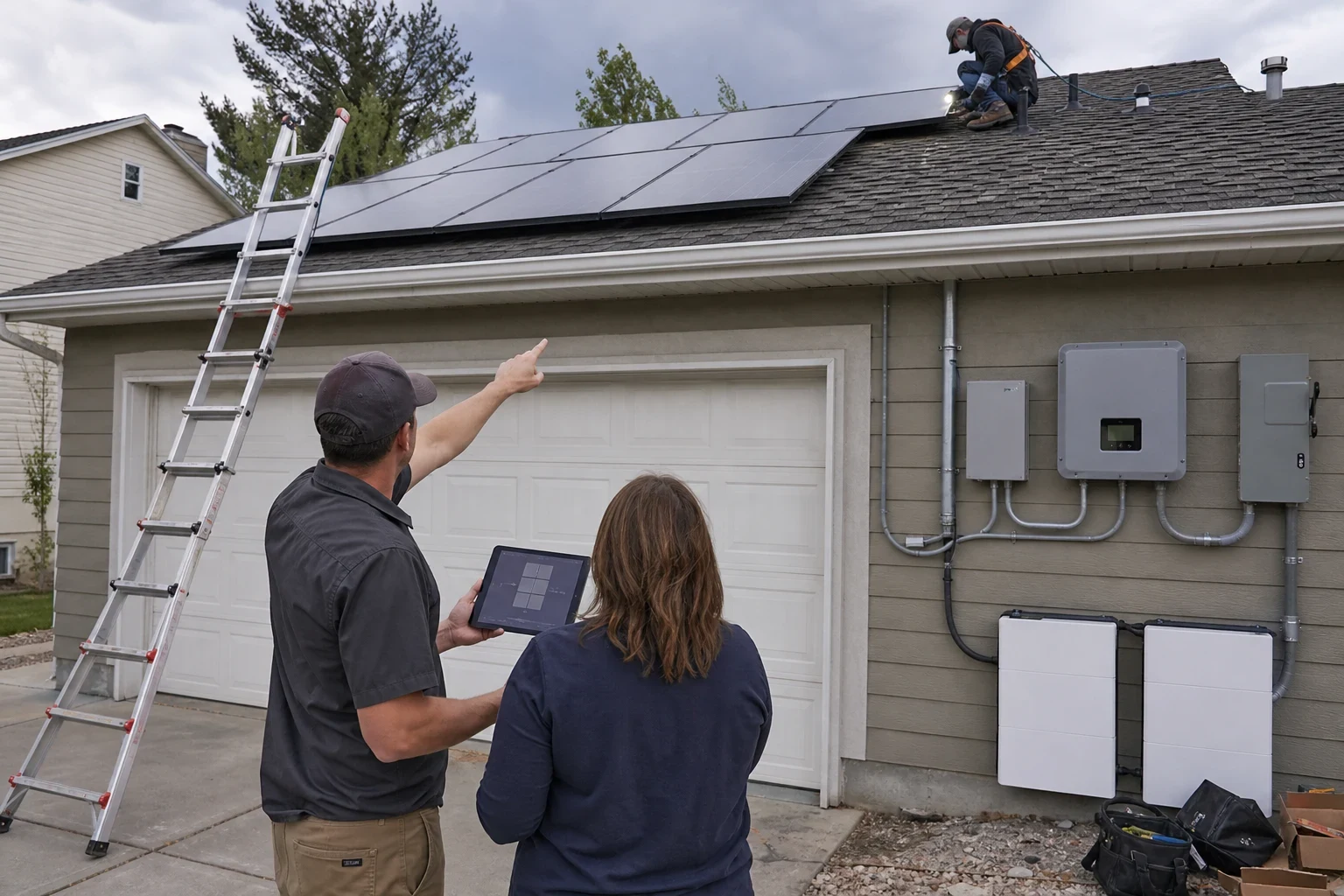
- We lay out the tradeoff between a single string inverter and microinverters or optimizers. Panel-level electronics limit losses when one module is shaded or fails, and they let us track each panel's output on its own.
- Mounting and conductor protection
- Racking is secured according to the engineered layout, and wire runs are clipped clear of surfaces and enclosed in conduit wherever they are exposed. Wire that chafes against metal edges is a common source of faults years down the line, so we take this step seriously.
- Permits, inspection and interconnection
- We prepare and submit the building and electrical permit applications, are on site for the inspection, and send your utility its interconnection application. The system stays off until the utility grants permission to operate.
- Monitoring setup
- Before we leave, the monitoring app is connected and we show you what a normal production day looks like, so any drop is easy to spot.
Signs Solar Is a Good Fit for Your Home
Summer bills that spike
Air conditioning use in July and August lines up with peak solar output, so panels offset your most expensive months.
Open, unshaded space with good exposure
South- and west-facing exposure with few obstructions delivers the most productive hours of sun through the year.
Plans to stay put
Solar earns back its cost gradually. The longer you stay in your home, the more of that return stays with you.
Adding load soon
An electric vehicle, heat pump or hot tub will push your usage up. Sizing for that load now is simpler than expanding the system later.
Interest in backup power
If outages worry you, we can lay out the system so Battery Storage connects cleanly later, with room set aside in the electrical design.
How a Solar Installation Moves From Call to Power-On
- 1
Free virtual appointment
Over video, we go through your bills and look at your property with satellite imagery. You get a production estimate and a written proposal with each line item listed.
- 2
Site survey and engineering
A technician measures the site, inspects your main electrical panel and confirms structural details. The finished drawings are submitted to the city for permit.
- 3
Installation day
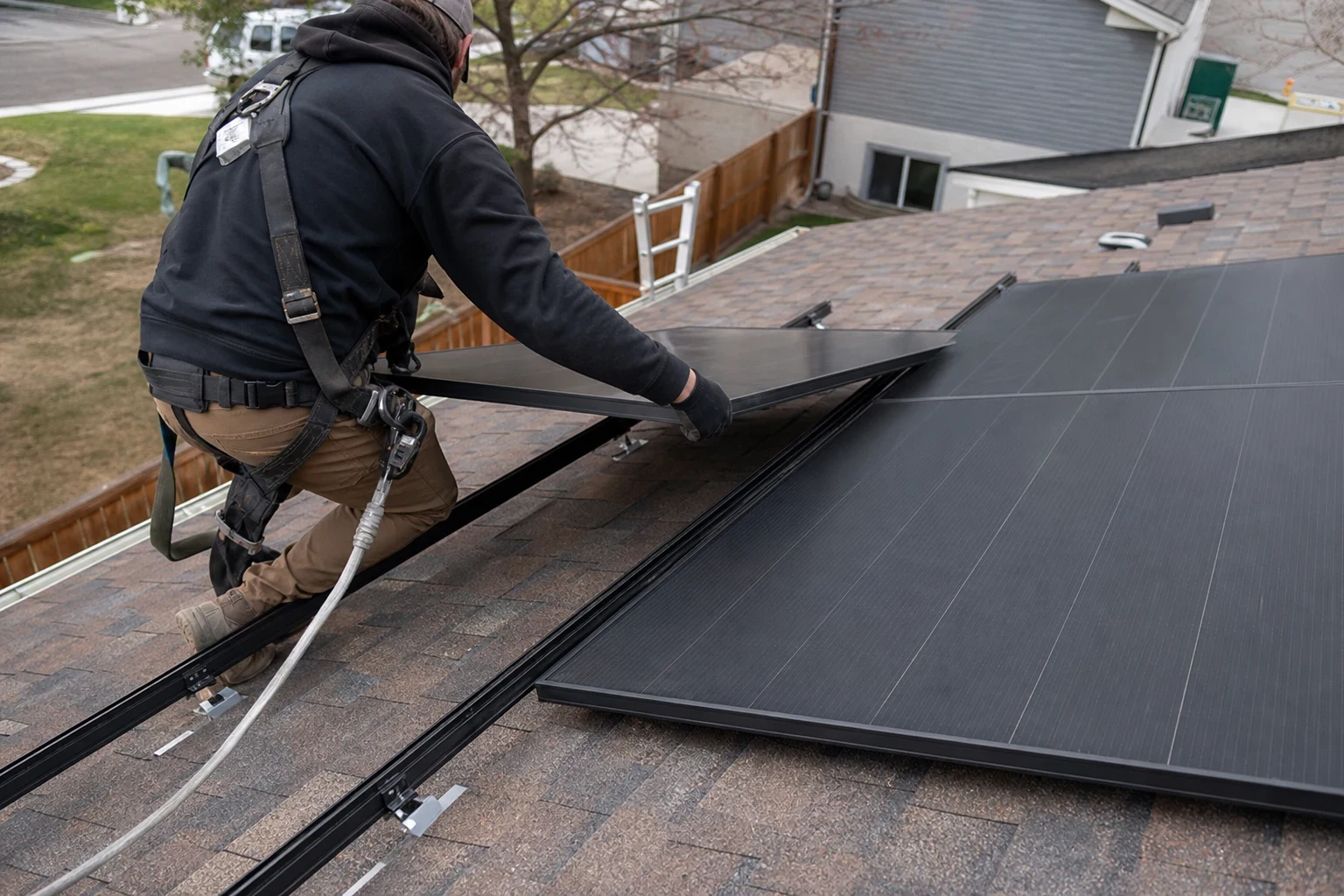
For a typical home system, the crew is on site for one to two days. We set racking, mount the modules, run conduit to the inverter and main panel, then pick up wire scraps and packaging before we go.
- 4
Inspection and permission to operate
Once the city inspection passes, your utility reviews the interconnection and may replace your meter. After approval we commission the system and confirm every panel is reporting.
What Moves the Cost of a Solar System
The price depends on how much power your home needs and how much work it takes to deliver that power safely. Every proposal breaks out equipment and labor line by line, so nothing is buried in a single total. Systems are available with $0 up front.
- System size
- Size is measured in kilowatts. Higher annual usage calls for more panels, more racking and more inverter capacity.
- Equipment choice
- Higher-efficiency modules and microinverters cost more per watt. They can get more output from limited space and hold production better when part of the array is shaded.
- Main service panel
- If your electrical panel is dated or has no open capacity, it may need replacing, or the solar can tie in on the supply side instead. We find this during the site survey so it never shows up as a late change.
- Site conditions
- A long distance between the array and your panel, trenching for buried conduit, or tight access all add material and labor hours.
- Planned add-ons
- Batteries, EV chargers or upgraded monitoring from our Solar System Add-Ons can go on the same permit and the same visit, which avoids a second round of paperwork.
Solar Installation Questions
Something not covered here? (801) 928-7645
How do panels handle Utah winters?
Modules are rated for heavy snow loads, and the dark glass and tilt help snow slide off once sunlight warms the surface. Output drops in December and January because the days are short, and that dip is already part of the annual estimate. On clear, cold days panels actually run more efficiently than in summer heat.
What does the warranty cover?
We provide a 25-year warranty on all solar and battery products. During your appointment we walk through which components that includes and what steps to take if production falls below what it should be.
Who handles permits and inspection?
We do. Our company is licensed in all states served, and every installation goes through the city permit process so an inspector reviews the finished work before it is switched on.
How long until the system is producing?
The physical work usually takes one to two days. Most of the wait comes from permit review and utility approval, and those timelines depend on the city and utility. We file everything and tell you where things stand at each stage.
Do I need to do anything to keep it working well?
Mainly, check the monitoring app now and then. A sudden drop from one panel or the whole array is the early signal, and spotting it quickly keeps a small fault from costing months of lost production.
Do you serve towns outside Kaysville?
Yes. We install systems throughout the area, including Layton, Farmington, Centerville and Syracuse. Our Service Areas page lists every town we cover.
See What Your Home Could Produce
We will review your bills, look at your site, and show you a realistic production estimate and a line-item proposal. If you know a neighbor who goes solar with us, you can earn $1,000 for every referral.