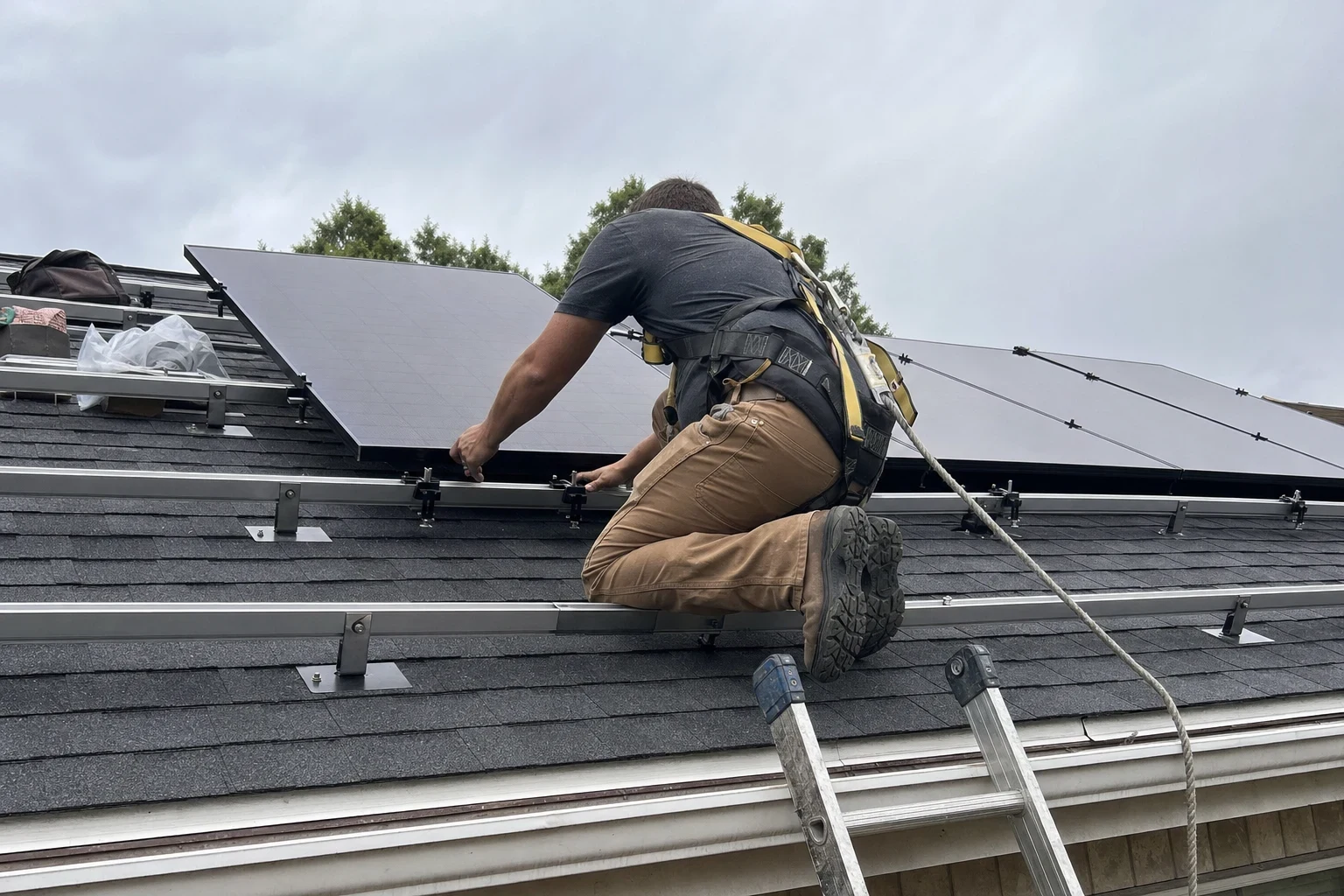
Solar Panels and Batteries in Kaysville, Built for Decades of Service
We install solar panels and battery storage for your home, add components to systems that are already producing, and fix the parts that wear out. Every system is laid out so the inverter, wiring and connectors can be reached, tested and serviced for years. We work in Kaysville, Layton, Farmington and the towns around them.
- Licensed in all states served
- 25-year solar and battery warranty
- $0 up front
- Free virtual appointments
How We Keep a System Producing
Most solar problems start small: a loose terminal, a chafed wire, a fuse that runs hot. We build and service systems so those small problems are easy to find and cheap to fix.
Parts chosen for serviceability
We favor equipment with accessible disconnects and replaceable components. Before you choose, we explain the tradeoff between a single string inverter, which is one part to swap when it ages, and microinverters or optimizers, which spread the work across many small units under the panels.
Wiring that does not rub through
PV wire left loose will flex against metal racking every time the temperature swings, and over a few seasons the jacket wears thin. We clip every run, keep bends wide, and use matched MC4 connectors from the same manufacturer. Mixed connectors are a known cause of heat damage at the joint, so we do not mix them.
Monitoring you actually understand
Before we leave, production monitoring is connected and we show you what a normal day looks like on your system. When one string drops, you see it while it is still a loose connector, not a scorched one.
A straight repair-or-replace answer
On an existing system, we test before we recommend anything. If a single fuse or optimizer is at fault, that is the part we replace.
Estimates broken out by component
Your written estimate separates the cost of the modules, the inverter, the mounting hardware, the wiring and breaker work, the permit fees and our labor. Choosing our $0 up front option does not change that, so you still see exactly what you are paying for.
Four Services, One Long View of Your System
We handle solar panel installation, battery storage, solar system add-ons and solar panel repair, and we plan each job around how the equipment will age. We are licensed in all states served. A 25-year warranty backs all solar and battery products in the systems we put on your home. Because that coverage runs so long, we size conductors with margin, seal every conduit entry and label every circuit as if we will be the ones opening that box in year twenty. Pick a service below to see how each one works.
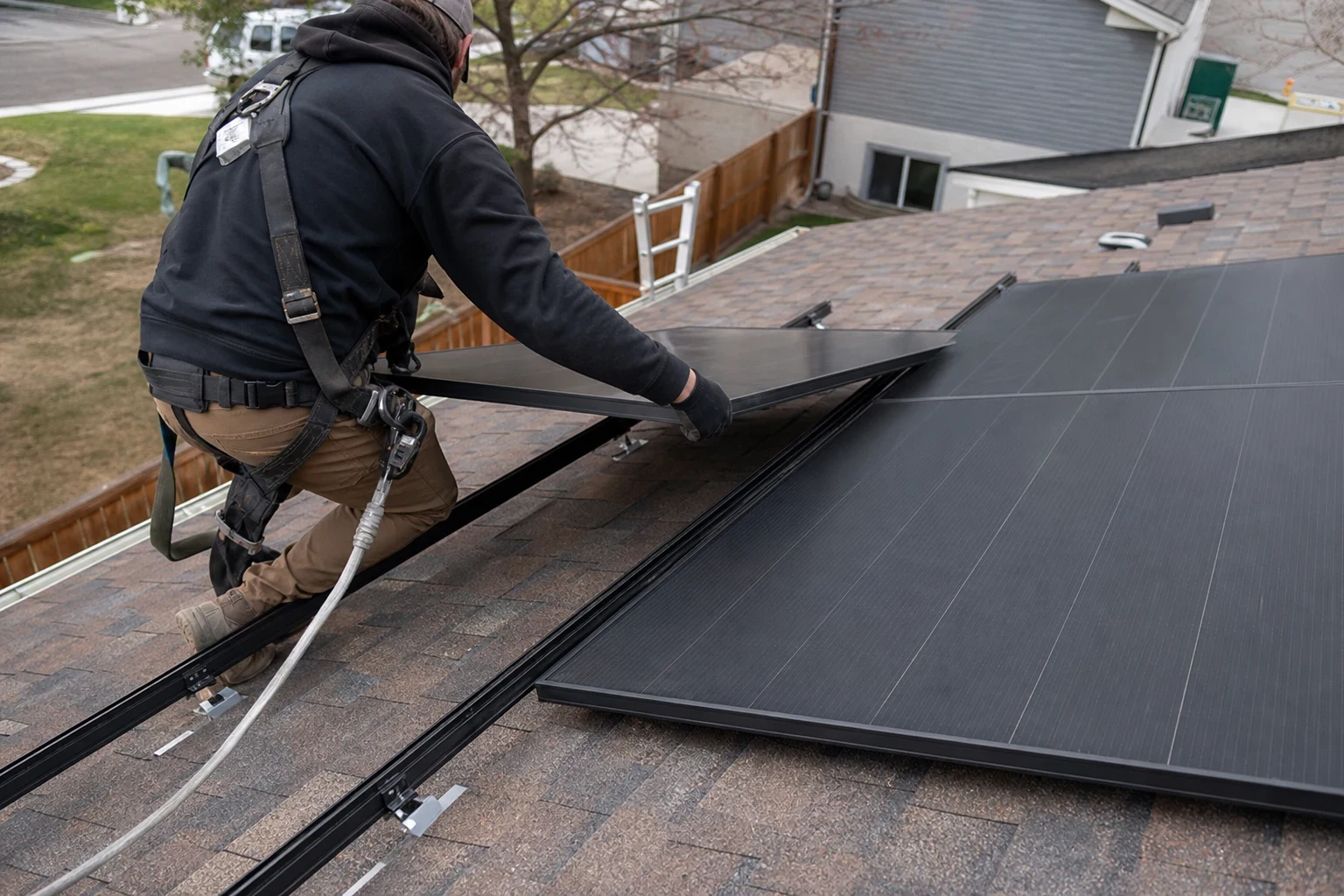
Solar Panel Installation
Panels, inverters, racking and wiring sized to your actual usage and set up so the system keeps producing well for decades.
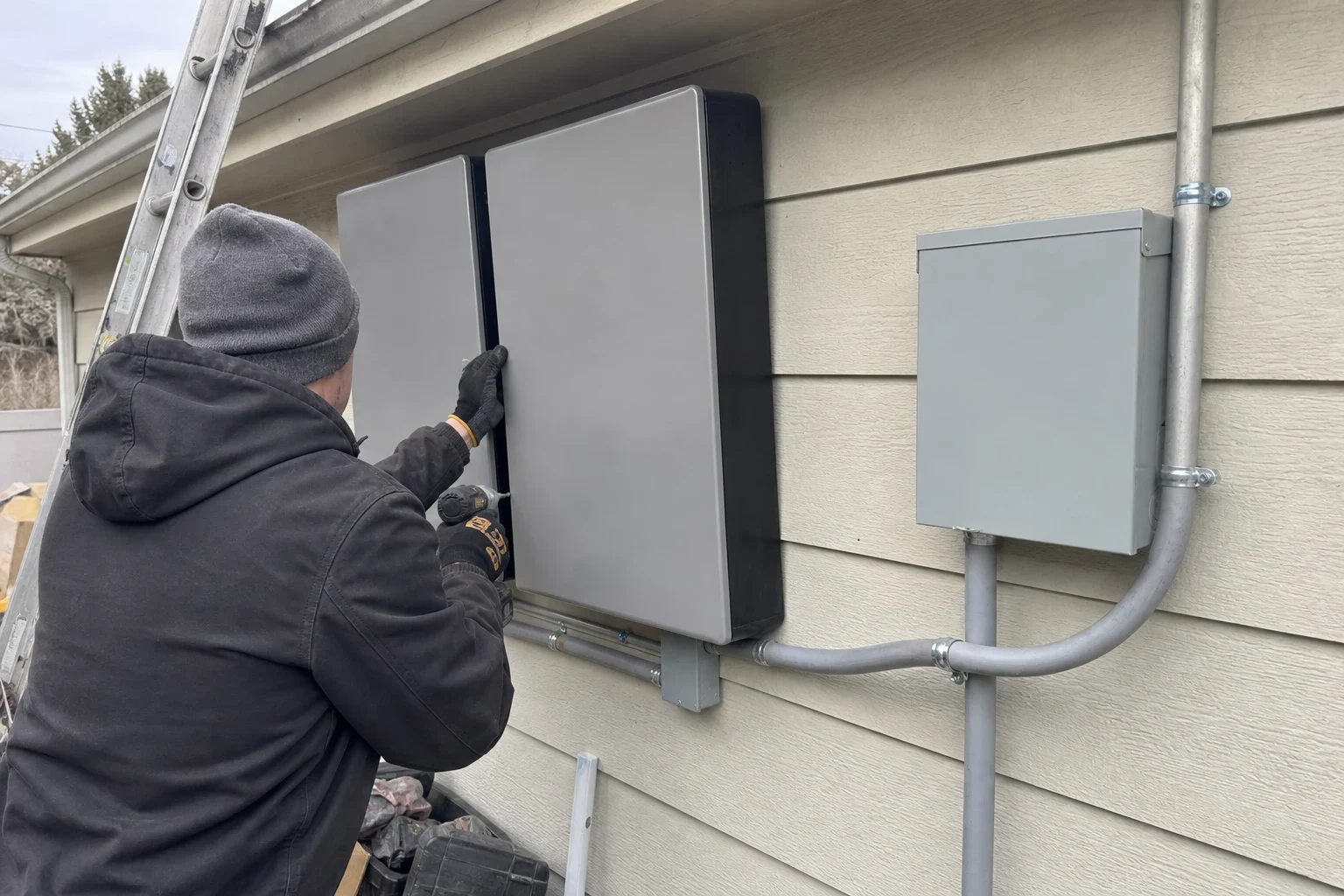
Battery Storage
Lithium iron phosphate home batteries sized to the circuits you actually need, placed where they stay healthy, and set up to keep holding a charge for decades.
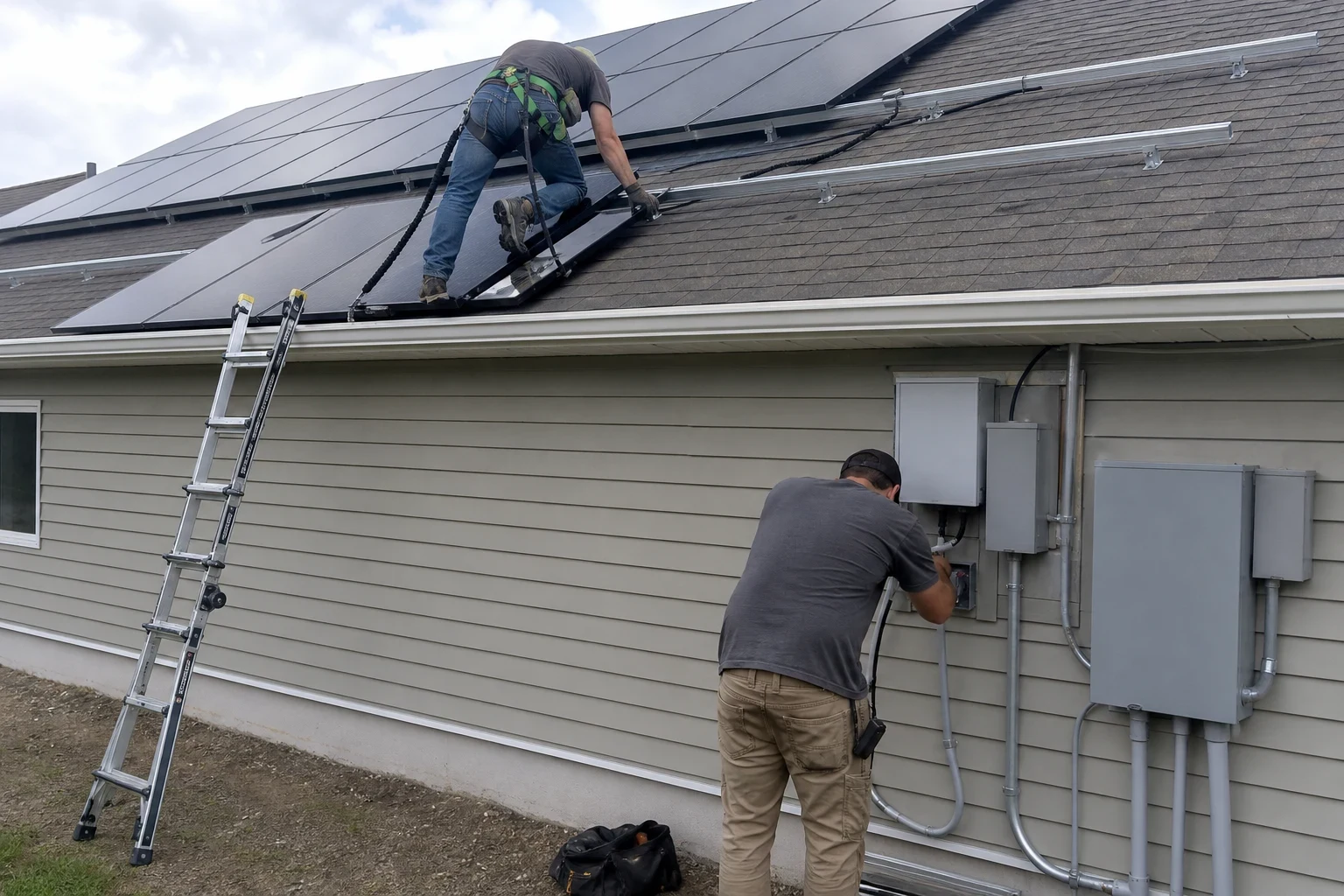
Solar System Add-Ons
Extra panels, EV charging, consumption monitoring and load control, matched to the inverter and electrical panel your system already uses.
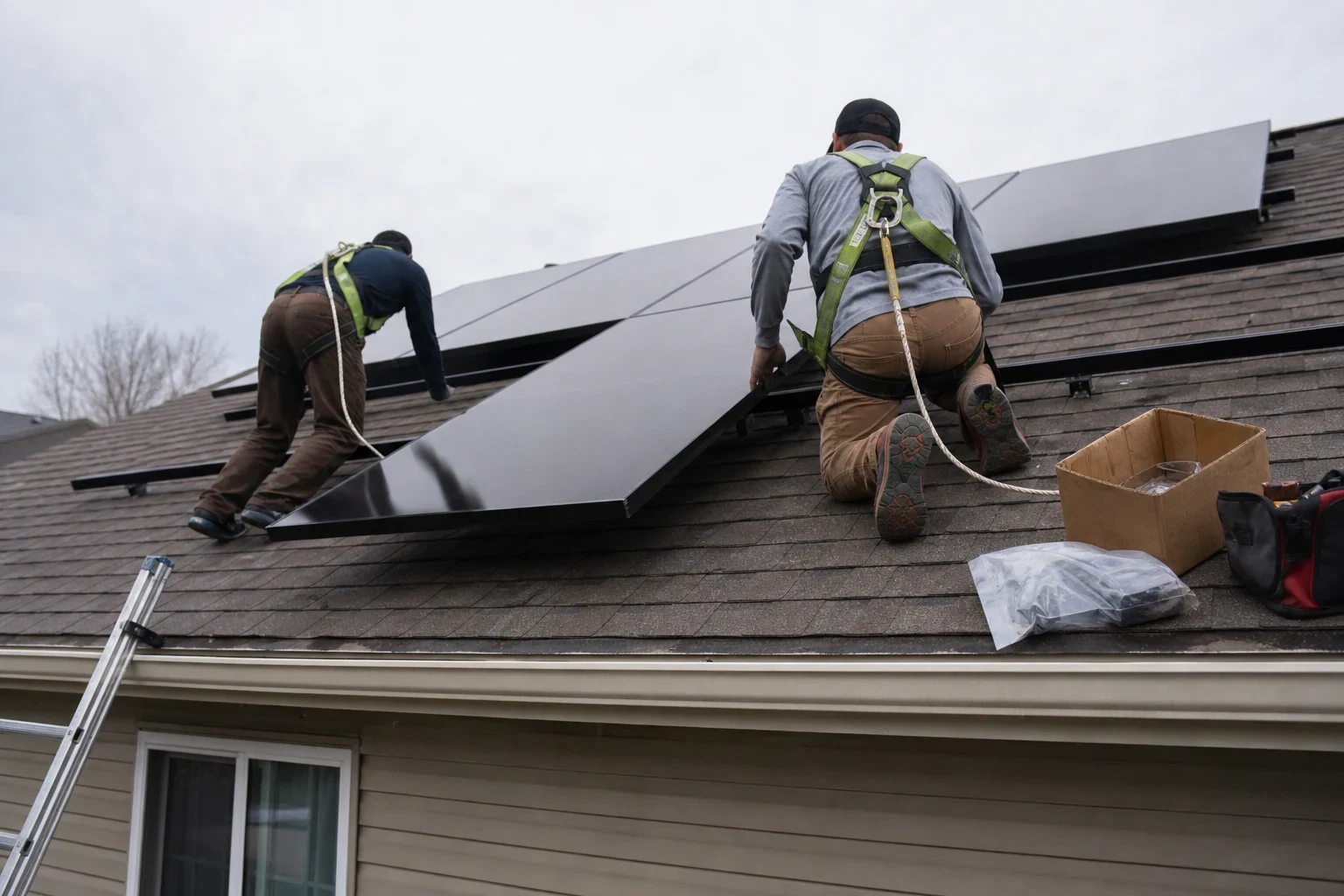
Solar Panel Repair
We find why your system is producing less, from a tripped inverter to a cracked module, and repair the failed part so the rest keeps working.
What Moves the Price of a Solar Project
No two systems cost the same, because no two homes use power the same way or have the same electrical setup. The items below shift the number more than anything else. Expect to go over each of them with us, line by line, during your free solar savings analysis.
After your free virtual appointment and a site check, you get a written, line-item estimate. If a design change moves the price, we show you which line changed and why.
- System size and your usage
- We size the array from twelve months of your utility bills, measured in kilowatt-hours. A home that runs electric heat or charges a car needs more panels than one that does not.
- Inverter type
- A string inverter usually costs less up front. Microinverters or optimizers cost more but let each panel work on its own, which helps when part of the array is shaded and makes faults easier to pinpoint later.
- Battery capacity and backed-up circuits
- Storage is priced by usable kilowatt-hours. Backing up a few essential circuits through a critical loads panel takes less capacity than backing up the whole house.
- Your main electrical panel
- Many older panels have a busbar rating that limits how much solar can feed into them. If yours is at that limit, a panel upgrade or a different connection method becomes part of the project.
- Distance to the panel
- The farther the array sits from your main panel, the longer the conduit run and the heavier the wire gauge needed to keep voltage loss low.
- Permits and interconnection
- Building permit fees and the utility's interconnection requirements add cost and time. Preparing those documents and filing them with the city and the utility is part of our job, not yours.
How a Job Runs From First Call to Monitoring
Most installations follow the same five steps. Here is what happens at each one and what we need from you.
- 1
Free virtual appointment
When you reach us by phone, we set up a virtual appointment. We look over your recent utility bills and a photo of your main electrical panel label, then talk through your goals for savings, backup power or both.
- 2
Site check and design
We visit to measure, check shading through the day and inspect your panel and service entrance. The design you receive shows panel layout, inverter location, conduit path and battery placement if you chose storage.
- 3
Permits and utility paperwork
We pull the building permit and file the interconnection application with your utility. A signature or two from you as the owner is usually all it takes, and any follow-up questions from the city or utility come to us.
- 4
Installation
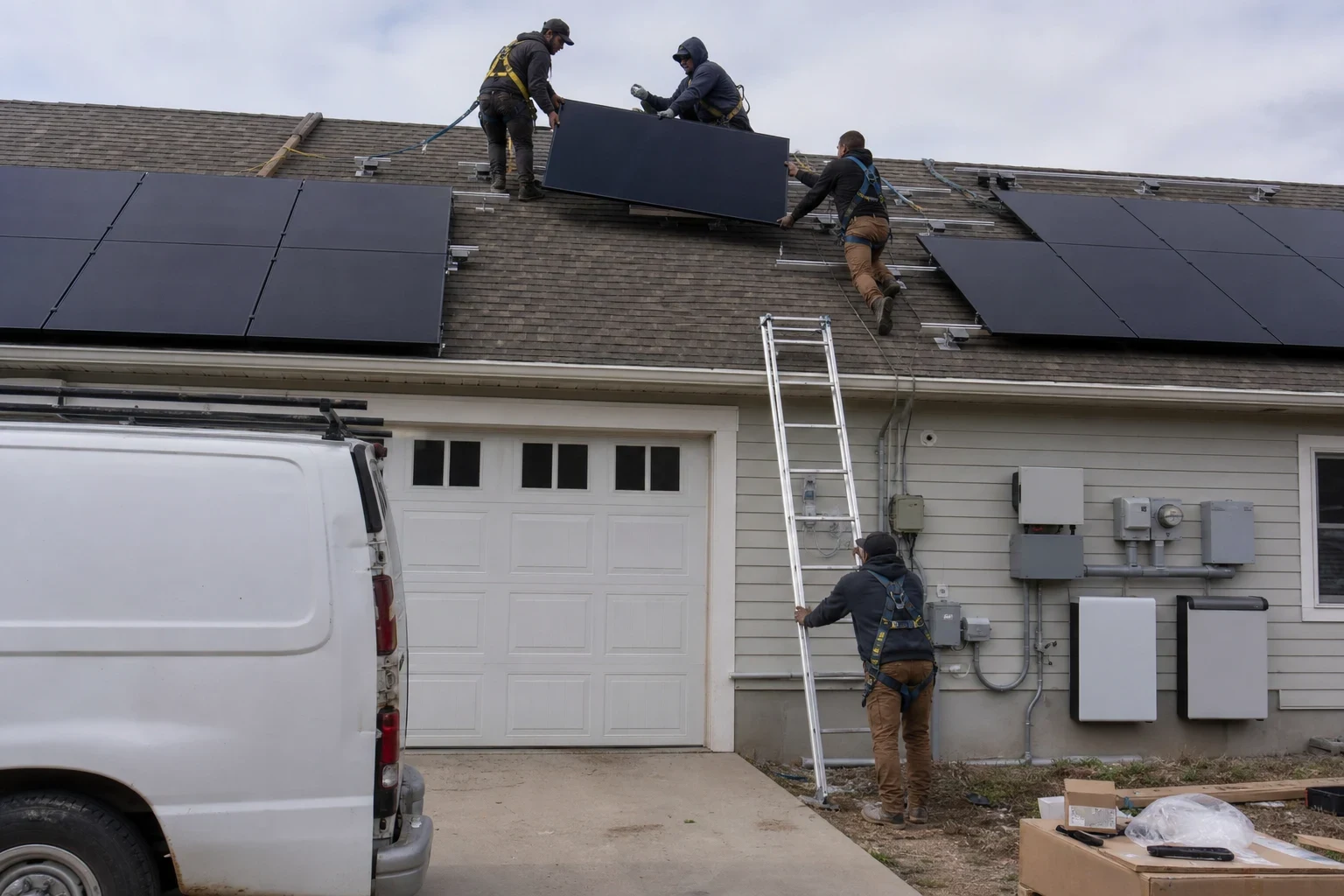
We protect walkways and landscaping around the work area, mount the racking, set the panels, run conduit and make the electrical connections. Every disconnect and breaker gets a permanent label, and we haul away packaging and scrap before we go.
- 5
Inspection and startup
After the city inspection and utility approval, we commission the system, confirm each string is producing as designed and set up your monitoring so you can watch it from day one.
Why We Plan for the Long Haul
Solar Installation Kaysville is a local company that installs and services solar and battery systems for homeowners in Kaysville and the surrounding towns. We think of a system as something that has to keep working long after the install crew is gone, so we design for the person who will open the inverter cover years from now, and we try to make that job easy.
In practice that means plain things done carefully. Torque values are checked instead of guessed. Conduit is sized with room to pull another conductor if you add a battery later. Labels are printed, not handwritten. Along the Wasatch Front, winters bring snow and hard freezes and summers bring long, hot days, and every connection we make is chosen to handle that full swing in temperature.
If a friend or neighbor likes what we built for you, we pay you $1,000 for every referral that goes solar.
- License
- Licensed in all states served
- Warranty
- 25-year warranty on all solar and battery products
Where We Work
We are based in Kaysville and serve homes across Davis County and southern Weber County. That includes Layton, Farmington, Fruit Heights, Centerville, Syracuse, Clearfield and Clinton. To the north we also work in South Weber, South Ogden and Washington Terrace.
- Kaysville
- Layton
- Farmington
- Fruit Heights
- Syracuse
- Clearfield
- Clinton
- South Ogden
- Centerville
- Washington Terrace
- South Weber
If your town is not listed, ask during your call. The Service Areas page has more detail on where we install and service systems.
Questions Homeowners Ask Us
Something not covered here? (801) 928-7645
How long do solar panels keep producing?
Panels lose a small amount of output each year, a process called degradation. Most quality modules keep producing for decades, well past the point where they have paid for themselves. Inverters usually need attention sooner than panels, which is why we install them where they are easy to reach and replace.
What warranty comes with the equipment?
We provide a 25-year warranty on all solar and battery products. During your virtual appointment we explain what that covers on the specific equipment in your design.
What does $0 up front mean?
It means you can have a system installed without paying for it at the start. Your written estimate still lists every component and cost, so you can see what you are financing before you agree to anything.
Will my panels work when the power goes out?
A grid-tied system without a battery shuts off during an outage. This is a required safety feature that keeps it from sending power onto lines utility crews may be working on. With battery storage, your system can disconnect from the grid and keep chosen circuits running. See our Battery Storage page for how that is set up.
Does snow stop production?
Snow covering the glass blocks sunlight, so output drops until it clears. Tilted panels with smooth, dark glass tend to shed snow on their own as the sun warms them. Winter days are shorter too, so we design around your full-year production, not your best summer month.
Can you add a battery or more panels to a system I already have?
Often, yes. It depends on your existing inverter, the capacity left in your main panel and whether the original conduit has room. We check those during the free virtual appointment and tell you plainly whether an add-on makes sense or whether something has to change first. Our Solar System Add-Ons page covers the common options.
What happens during the virtual appointment?
You reach us by phone and we set a time. We go over your utility bills, your electrical panel and what you want the system to do, then give you a free solar savings analysis. There is no obligation, and nothing is scheduled until you have a written estimate in hand.
Start With a Look at Your Numbers
Bring a year of utility bills and a photo of your electrical panel. We will show you what a system would produce on your home, what it would take to keep it running for decades, and what it would cost.