ServicesBattery Storage
Battery Storage in Kaysville
We add home batteries that store your solar power for evenings and outages. We size the system to the circuits you rely on, mount it where temperature stays in check, and configure it so the cells age slowly instead of wearing out early.
What a Home Battery Does for Your Solar
Solar panels make power when the sun is up. Most homes use the most power after dark. A battery closes that gap. It charges from your panels during the day and runs your home in the evening, or keeps chosen circuits on when the grid goes down.
We install lithium iron phosphate (LFP) batteries. LFP chemistry tolerates heat better than older lithium types and handles thousands of charge cycles. It still has limits. Charging LFP cells below freezing can plate lithium on the anode and permanently cut capacity, so where the battery lives and how it manages its own temperature matter as much as the brand on the label.
That is why we treat a battery as equipment you will own for a long time. Placement, settings and a sensible reserve level decide whether it still holds most of its capacity years from now. Our work is licensed in all states served.
What Our Battery Installation Includes
Load review and sizing
We look at your utility history and the circuits you want backed up, such as the furnace blower, refrigerator, well pump or internet. Sizing to real loads avoids paying for capacity you never use, or buying too little to get through a night.
Critical loads panel
When whole-home backup is not practical, we move your essential circuits to a dedicated subpanel the battery can carry. That keeps a large appliance from draining the battery in an hour during an outage.
Placement and thermal planning
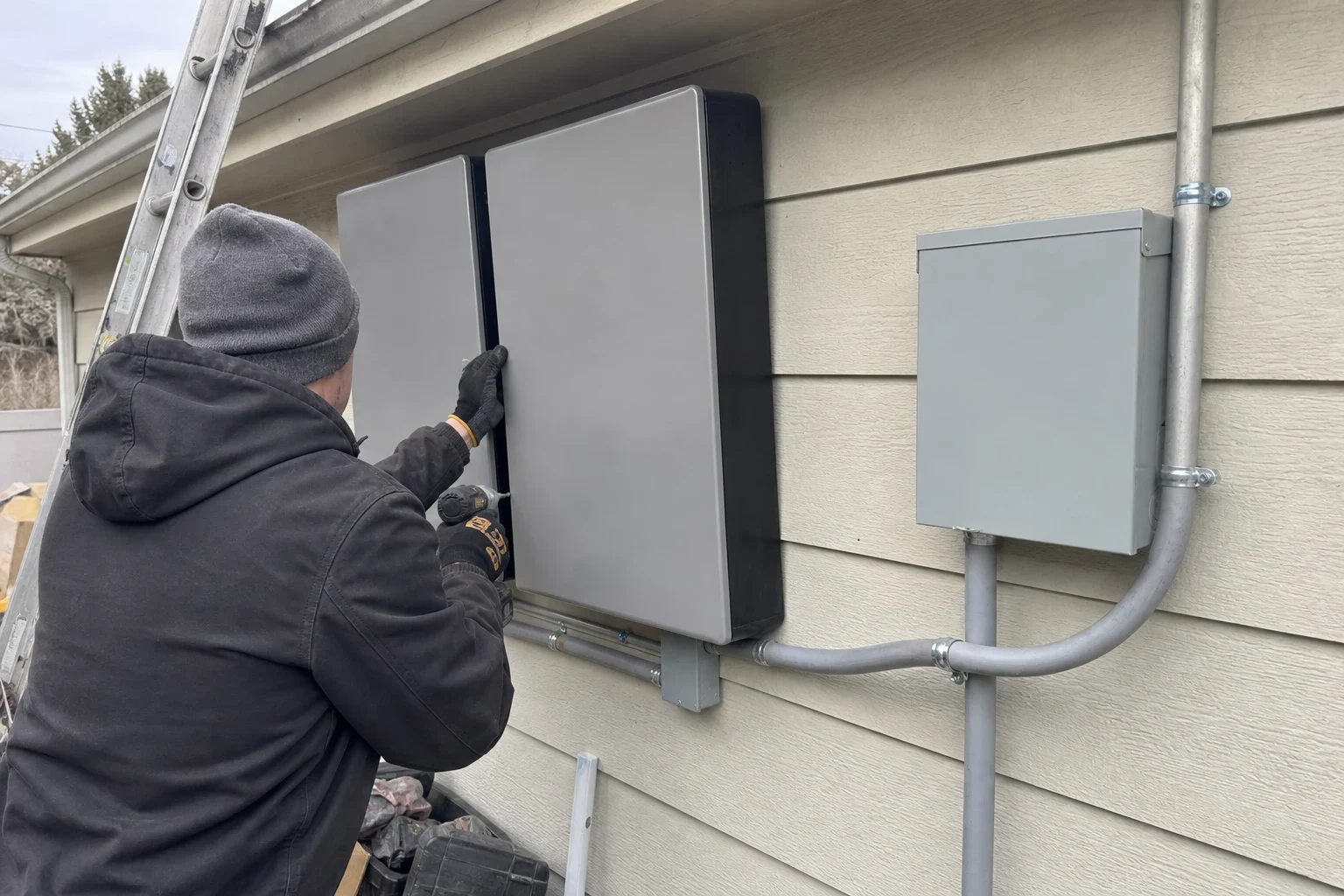
We mount the battery in a garage or on an exterior wall with clearances that meet fire and electrical code. We keep it out of direct afternoon sun and choose units with built-in heating so winter charging stays within safe cell temperatures.
Inverter and gateway setup
We wire the battery inverter and the transfer gateway that disconnects your home from the grid during an outage, so power never feeds back onto utility lines while crews are working.
Configuration for long life
We set a backup reserve and charge window that avoid sitting at 100 percent for weeks. Moderate states of charge slow cell aging, and we explain each setting in the monitoring app before we leave.
Signs Battery Storage Makes Sense for Your Home
You export most of your solar
If your panels push power to the grid at midday and you buy it back at night, a battery lets you use your own production instead. Export credits are typically worth less than the power you buy back.
Outages leave you without heat
A gas furnace still needs electricity for its blower and igniter. A battery on a critical loads panel keeps it running when a winter storm knocks out power.
Your solar shuts off in a blackout
Standard grid-tied inverters stop producing when the grid fails, by design. Adding storage and a gateway lets your panels keep charging and powering your home during the outage.
Someone at home depends on power
Medical devices, a sump or well pump, or a home office that cannot drop offline are strong reasons to have stored power on hand.
How a Battery Project Runs
- 1
Free virtual appointment
We review your bills, your existing solar if you have it, and the circuits you care about over a video call. You get a recommended size and a plain explanation of why.
- 2
Design and permit
We draw the electrical plan, confirm your main panel can accept the new equipment, and pull the electrical permit. If a panel upgrade is needed, you hear about it here, not on install day.
- 3
Install day
We finish most battery installs in one working day. Your home loses power for a stretch while the gateway and subpanel are connected, and we give you that time window in advance. Packaging and wire offcuts leave with us.
- 4
Inspection and handoff
The inspector checks the work, then we commission the system, test a simulated outage and walk you through the app and reserve settings.
What Moves the Cost of Battery Storage
The price of a battery project comes down to how much stored energy you need and how much electrical work it takes to tie that storage into your home. After the virtual appointment we give you a written, line-item quote so you can see each part. Many homeowners start with $0 up front.
- Storage capacity
- Each added kilowatt-hour means more battery modules on the wall. Keeping a refrigerator, furnace blower and a few lights alive overnight calls for a much smaller bank than cooling the whole house until morning.
- Whole-home or partial backup
- Partial backup usually needs a critical loads subpanel. Whole-home backup may need a larger inverter or more than one battery to start big motors.
- Main panel condition
- An older or full main panel may need an upgrade to accept the gateway and breakers. We check this before quoting.
- Existing solar equipment
- Pairing with a newer system is often simple. Older inverters can require AC coupling, which adds a separate battery inverter.
Battery Storage Questions
Something not covered here? (801) 928-7645
My panels are already installed. Is it too late for a battery?
In most cases, no. A battery can tie in through AC coupling, which connects on the house side of the inverter you already own, so your array stays as it is. We check your inverter model and panel during the free virtual appointment. Extra panels and other upgrades are covered on our Solar System Add-Ons page.
How long will the battery last?
LFP batteries are built for thousands of cycles, and setup has a big effect on how they age. Keeping the battery out of heat and freezing conditions and avoiding long stretches at full charge slows capacity loss. We back all solar and battery products with a 25-year warranty.
Will it run my whole house during an outage?
It depends on battery size and what you run. Most homeowners back up essentials like the furnace, refrigerator, lights and outlets. We size the system around the loads you choose so you know how long it should carry them.
Does the battery need maintenance?
There are no fluids or filters. We recommend glancing at the monitoring app now and then, keeping clearances around the unit free of stored items, and letting firmware updates install. Those habits do most of the work of keeping it healthy.
Can I change the backup reserve later?
Yes. The reserve level and charge window live in the monitoring app, and you can adjust them as your needs change. Raising the reserve before a forecast storm is common. We suggest settling back to a moderate level afterward so the cells are not held at full charge for weeks.
See What Storage Would Do for Your Home
We will look at your usage and outage needs, then tell you what size makes sense and why. Homeowners in Kaysville, Layton, Farmington and nearby towns can get started with one phone call.