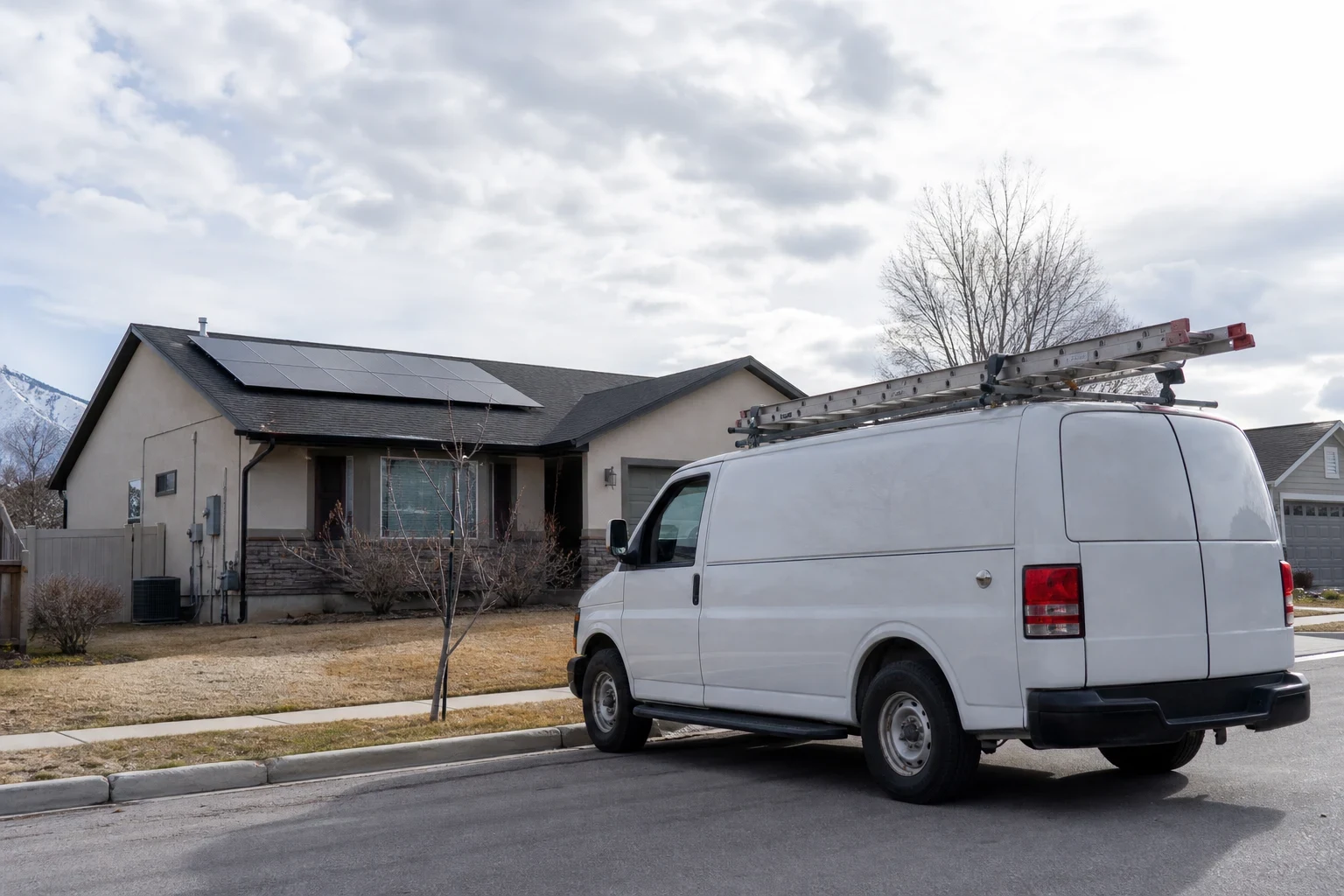
Solar Installation in Kaysville and Nearby Towns
We design and install solar panel systems and battery storage for homes in Kaysville and the surrounding towns. Each system is planned for decades of service, with conductors, connectors and inverters chosen to handle snow, summer heat and the long gray weeks of winter.
Towns we cover from Kaysville
- Kaysville
- Layton
- Farmington
- Fruit Heights
- Syracuse
- Clearfield
- Clinton
- South Ogden
- Centerville
- Washington Terrace
- South Weber
Not on the list? Call (801) 928-7645 and ask.
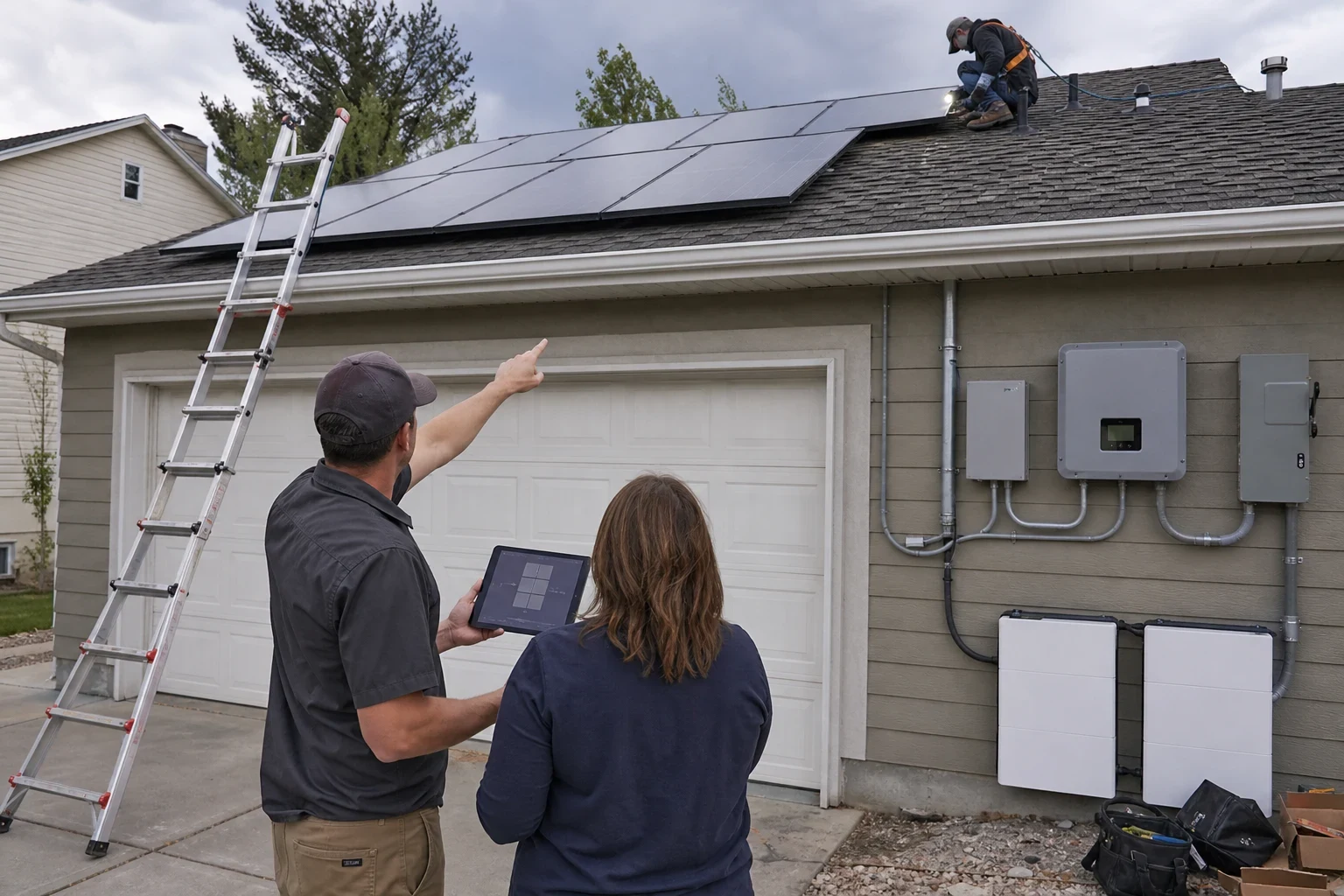
The Towns We Work In
We are a Kaysville company, and nearly every system we plan sits within easy reach of town. Homeowners in Layton, Farmington, Fruit Heights and Centerville make up a large share of our work, along with Syracuse, Clearfield and Clinton to the west. The crew that sizes your system also carries it through permitting and final inspection, so the choices made on the first call hold all the way to the day the system turns on.
Across the county line to the north, we also work in South Weber, South Ogden and Washington Terrace. Wherever your home sits in that stretch, the first step is the same: a free virtual appointment where we look at your electric bills, your available space and your main electrical panel, then explain what a system would produce and what it would take to install. Financing with $0 up front is available, so the conversation can focus on the right design instead of a large check.
What Shapes a Solar System Here
- 01
Weather and long service life
Winters bring snow, repeated freeze-thaw cycles and cold nights, while summers run hot and dry. Heat lowers panel voltage and cold raises it, so we size strings for both extremes and choose UV-rated conduit and sealed connectors. That keeps wiring from cracking or loosening years after the install, which is where most long-term problems start.
- 02
Housing age and electrical panels
The area mixes older homes from the 1960s through the 1980s with newer subdivisions. Older homes often have 100-amp main panels with little room for a new breaker, and we check that early. Sometimes the answer is a service upgrade or a supply-side connection; newer 200-amp panels usually accept solar without changes. You hear which applies before anything is ordered.
- 03
Permits, inspection and interconnection
Every city here has its own building department that reviews plans and sends an inspector to check the electrical work. After that, your electric utility has to approve the interconnection before the system can run. We prepare the drawings, pull the permit and track the utility paperwork, so you are not chasing approvals yourself.
- 04
HOA review
Many newer neighborhoods have an HOA with architectural review. We provide a layout drawing showing panel placement and equipment locations so the board has what it needs to decide.
- 05
Short winter days
Production drops in December and January when days are short and inversions hold haze over the valley. Our production estimates account for that seasonal dip, and battery storage can help you use more of what the panels make during the brighter months.
See What Solar Would Look Like at Your Home
Tell us which town you live in and have a recent power bill handy. We will walk through a system sized for your home and explain the permit and utility steps where you live.